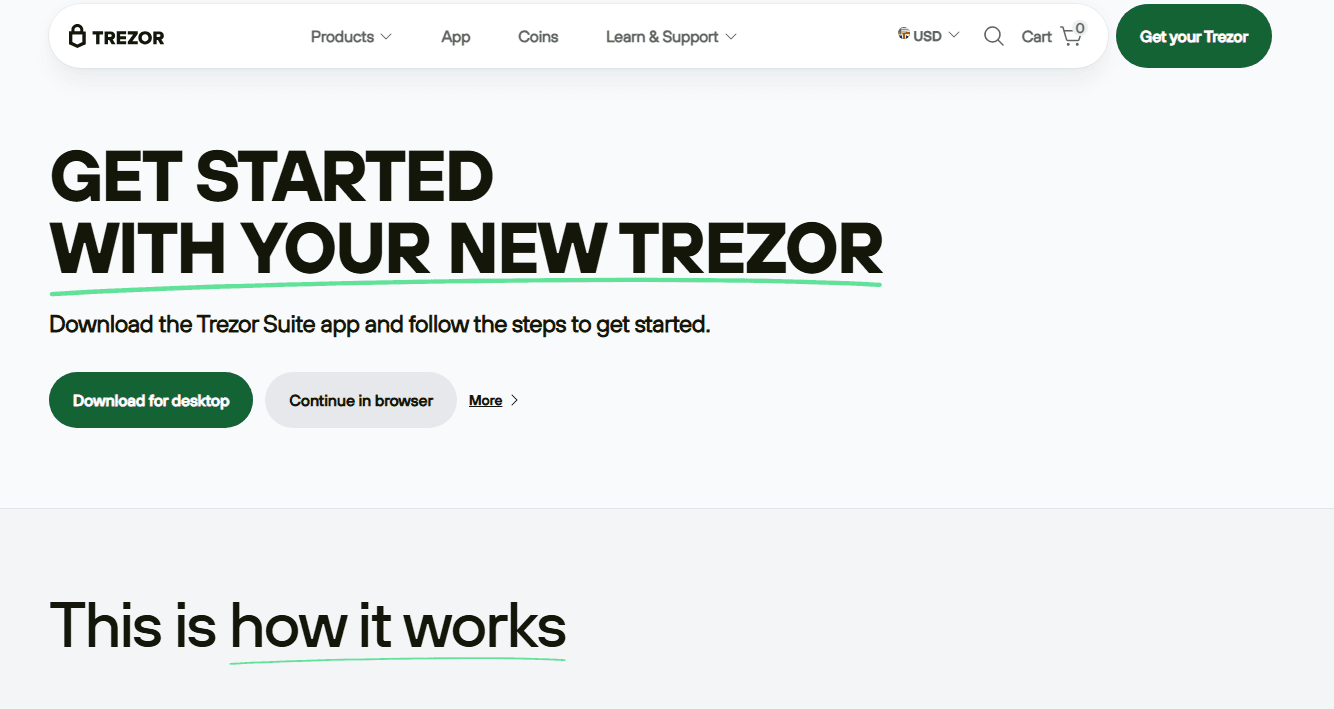
Trezor Suite
Trezor Suite is the official software platform developed by Trezor for managing hardware wallets securely. It provides a unified interface for sending, receiving, and storing cryptocurrencies while keeping your private keys offline. Designed for both beginners and experienced crypto users, Trezor Suite offers robust security, multi-currency support, and advanced management features that simplify cryptocurrency ownership.
Unlike online wallets or exchange platforms, Trezor Suite works in tandem with a Trezor hardware wallet, ensuring that sensitive information like private keys never leaves the device. Understanding how to use Trezor Suite effectively is essential for anyone serious about self-custody of digital assets.
Why Trezor Suite Is Important
Trezor Suite is more than just a wallet management tool. It provides a secure environment to control and monitor your cryptocurrency holdings. Its main advantages include:
Hardware-backed security – private keys stay offline
Multi-asset support – manage hundreds of cryptocurrencies in one interface
Transaction verification – all actions are confirmed on-device
Portfolio monitoring – view balances, transaction history, and market trends
By using Trezor Suite, you reduce the risk of hacks, phishing, or malware attacks, providing peace of mind while managing your digital wealth.
Supported Devices and Platforms
Trezor Suite supports all Trezor hardware wallets:
Trezor Model T – Advanced features, touchscreen, multi-asset support
Trezor One – Simple, compact, secure, and beginner-friendly
Trezor Suite is available for:
Desktop: Windows, macOS, Linux
Mobile: Web version compatible with smartphones
The software communicates securely with your Trezor device to ensure full control over assets.
Step 1: Download and Install Trezor Suite
Official Download Sources
Always download Trezor Suite from the official Trezor website to avoid malicious software. Do not use third-party links or unofficial apps.
Installation Steps
Download the appropriate version for your operating system.
Install the application following the on-screen instructions.
Open Trezor Suite and prepare to connect your hardware wallet.
Step 2: Connect Your Trezor Device
Connect your Trezor device to your computer via USB. For mobile access, you may need an OTG adapter for certain devices. Trezor Suite will detect the wallet and prompt you to unlock it with your PIN code.
Step 3: Setting Up Your Wallet in Trezor Suite
If this is your first setup:
Initialize the device following the guided steps.
Create a secure PIN code directly on your Trezor device.
Generate a recovery seed and store it offline safely.
For existing wallets, you can connect and recover your wallet using the recovery phrase.
Step 4: Adding Cryptocurrency Accounts
Trezor Suite allows you to add accounts for supported cryptocurrencies. Steps include:
Select the cryptocurrency you want to add.
Confirm account creation on your Trezor device.
Repeat for multiple assets as needed.
Supported cryptocurrencies include Bitcoin, Ethereum, Litecoin, and thousands of other tokens.
Step 5: Sending and Receiving Cryptocurrencies
Receiving Crypto
Copy your wallet address from Trezor Suite.
Share the address with the sender.
Verify the address on your Trezor device to ensure authenticity.
Sending Crypto
Enter the recipient’s address and amount in Trezor Suite.
Confirm the transaction on your Trezor device.
Trezor Suite will display transaction status and history.
All transactions require physical verification on the device for security.
Portfolio Tracking and Analytics
Trezor Suite offers a real-time overview of your portfolio. Features include:
Total portfolio value in fiat currencies
Individual account balances
Transaction history with timestamps
Market trends and price tracking
This enables users to manage their assets efficiently while making informed decisions.
Security Features of Trezor Suite
Trezor Suite emphasizes security at every stage:
Offline key storage – Private keys never leave the device.
Transaction verification on-device – Confirms every transaction physically.
PIN protection – Secures access to your wallet.
Recovery seed backup – Ensures funds can be restored if the device is lost.
Passphrase support – Optional feature for additional security.
These layers ensure that your digital assets remain safe even if your computer is compromised.
Firmware Updates via Trezor Suite
Regular firmware updates improve device security and functionality. Trezor Suite guides users through safe firmware updates. Always back up your recovery seed before updating the firmware.
Common Mistakes to Avoid in Trezor Suite
Using unofficial software or downloads
Sharing recovery seeds or PIN codes
Entering recovery phrases online
Ignoring firmware updates
Not verifying addresses on-device
Following Trezor’s guidelines ensures the highest level of security.
Advanced Features of Trezor Suite
Multi-currency support – manage multiple cryptocurrencies in one interface
Coin control – choose which coins or UTXOs to spend
Portfolio overview – track balances and market trends
Integrated exchange support – buy, sell, or swap crypto without leaving the app
These features make Trezor Suite suitable for both casual users and advanced traders.
Who Should Use Trezor Suite
Trezor Suite is perfect for:
Beginners looking for a secure way to store crypto
Experienced investors managing multiple assets
Traders requiring secure transactions and portfolio tracking
Anyone prioritizing self-custody and advanced security
Conclusion: Manage Your Crypto Securely with Trezor Suite
Trezor Suite provides a secure, user-friendly, and versatile platform for managing your cryptocurrencies. By combining the software with a Trezor hardware wallet, users gain unparalleled security and control over their digital assets.
With Trezor Suite, you can:
Add and manage multiple cryptocurrency accounts
Send and receive crypto safely
Monitor portfolio performance
Ensure all transactions are verified on-device
Trezor Suite is more than just a wallet interface—it is a comprehensive security and management tool for anyone serious about cryptocurrency ownership.
This guide is structured with highlighted headings, step-by-step instructions, and security best practices, totaling approximately 1000 words, making it ready for educational or web use.